Places to visit Published on 8 July 2026
Low Tide in Arromanches: the Mulberry Harbour Remains
Tide times, coefficients, spring tides, foreshore safety: our guide to observing the remains of the artificial harbour at Arromanches-les-Bains.
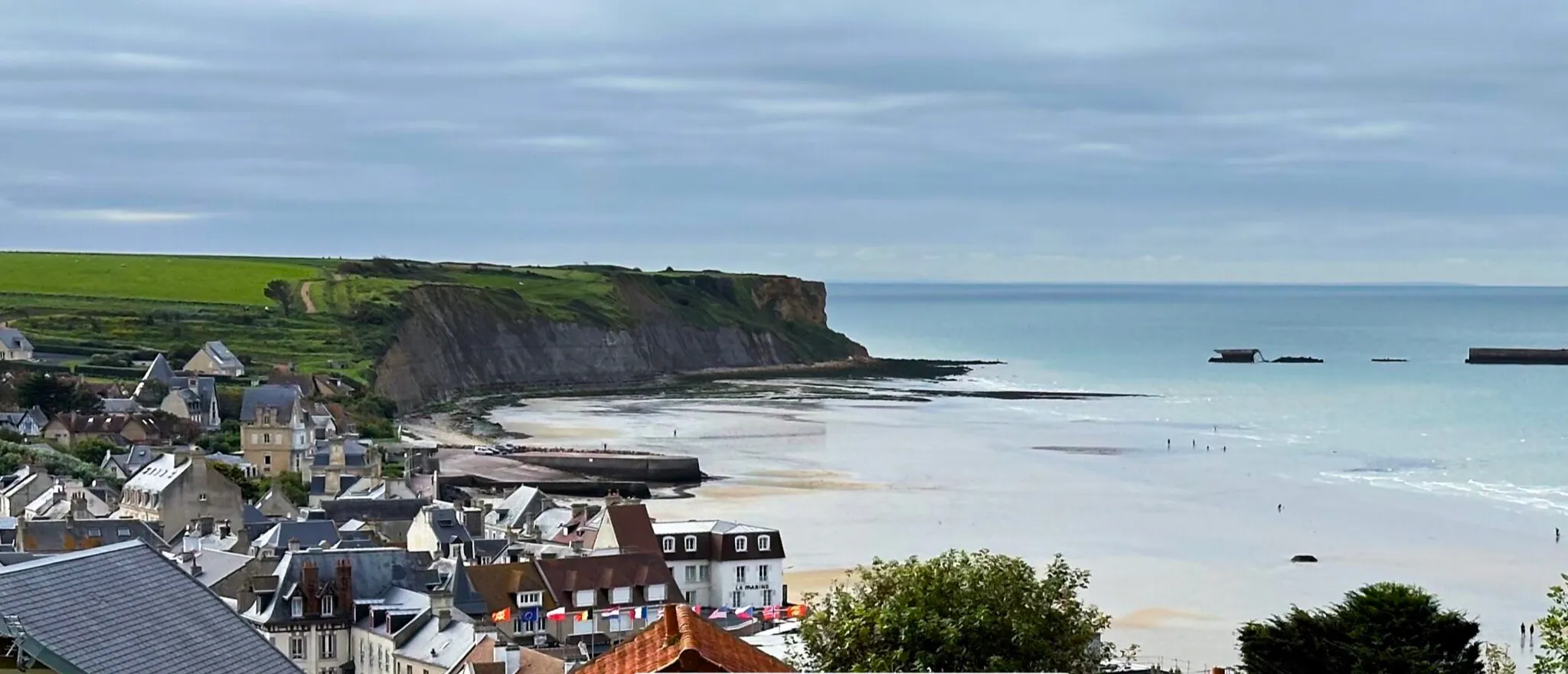
At Arromanches-les-Bains, the tide does more than simply expose a beach: twice a day, it reveals one of the most striking historic sites on the Normandy coast. The concrete caissons of the Mulberry B artificial harbour, barely visible at high tide, become at low tide huge structures you can approach, sometimes on foot. Here is how to plan your visit so you do not miss the sight — and how to do it safely.
Why does the tide change the landscape so much at Arromanches?
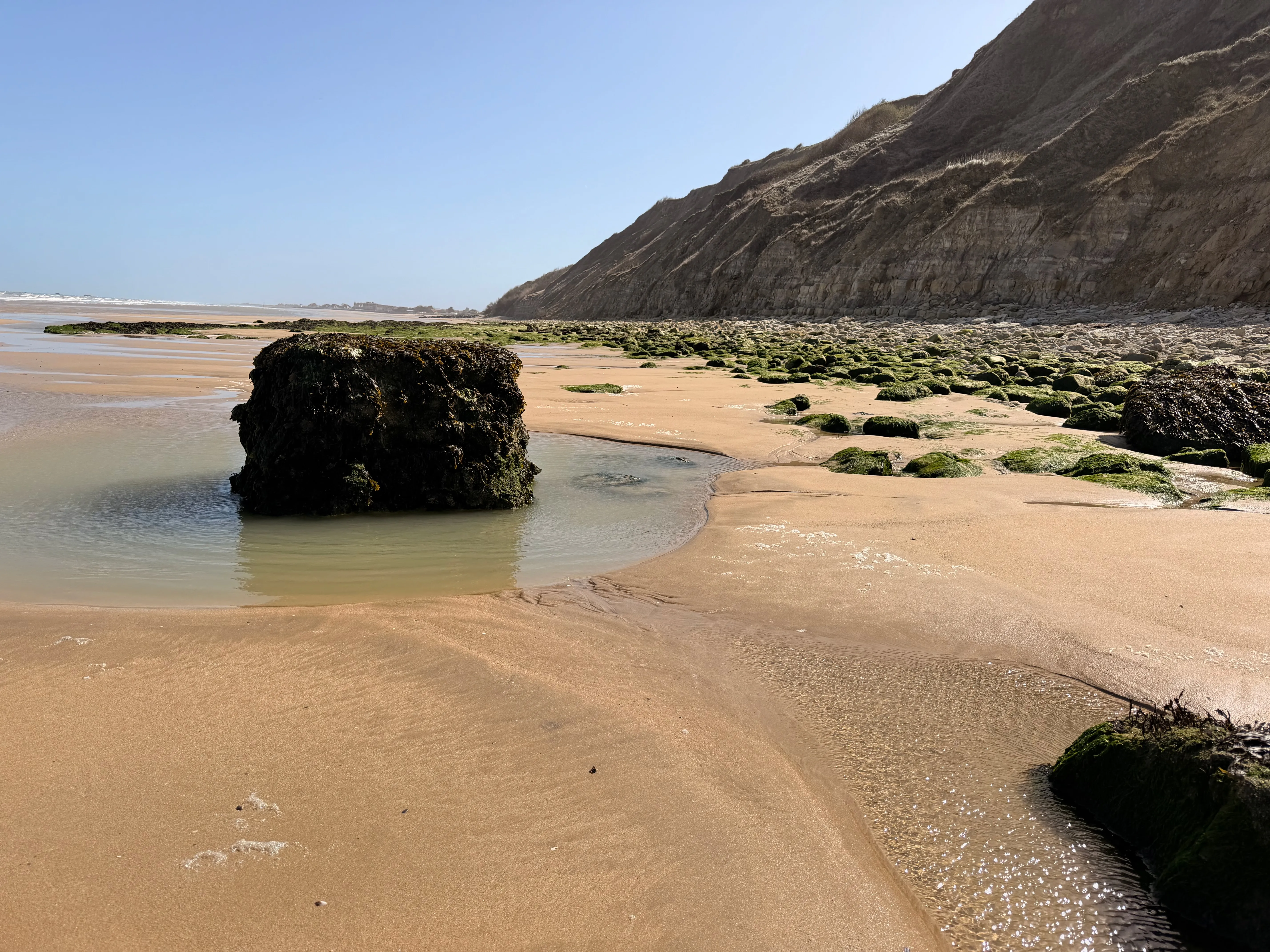
The Bessin coast is one of the Channel's large tidal-range shorelines: the difference in water height between high and low tide can exceed several metres here. On Gold Beach, this tidal range transforms the landscape completely: at high tide, a narrow strip of sand; at low tide, a vast foreshore stretching several hundred metres, where rocks, pools and D-Day remains all come into view. It is this daily contrast that makes Arromanches a site worth visiting at different times depending on what you want to see.
How do you check tide times before you come?
Tide times differ from one port to the next and are calculated officially by SHOM, the French naval hydrographic and oceanographic service, which publishes the reference predictions for the whole French coastline. For data specific to Arromanches-les-Bains, the maree.info portal offers a dedicated page with the day's times, heights and coefficients, calculated from SHOM data.
The tidal coefficient, a unitless index between 20 and 120, indicates the expected size of the tide: the higher it is, the greater the gap between high and low water. By convention, a spring tide starts at a coefficient of 100 — that is when the foreshore is exposed at its widest and you can get closest to the artificial harbour remains. A calendar of the year's coefficients is available at maree.info/27/coefficients.
What Mulberry harbour remains can you see at low tide?
At low tide, the line of Phoenix caissons that still traces the arc of the old Mulberry B harbour becomes much clearer from the beach, and several sections stranded on the foreshore become reachable on foot. Our article on the Mulberry artificial harbour and Gold Beach tells the full story of this extraordinary engineering feat from the summer of 1944 and details what remains of it today: caissons, blockships and platforms still identifiable offshore and on the foreshore.
Where is the best spot to watch the tide go out?
Two viewpoints complement each other. From the beach itself, you get as close as possible to the stranded remains, in the particular atmosphere of a foreshore uncovering itself before your eyes. From above, the village's eastern cliff, a few minutes' climb near the circular cinema, offers a full panorama over the bay: from there, you take in the whole arc formed by the caissons in a single glance. Our article on the cliffs and coastal path of Arromanches details how to reach this viewpoint and other walking loops above the village. Either way, aim for early morning or late afternoon: the low, raking light shows off the remains and the tide pools particularly well.
What precautions should you take on the foreshore at low tide?
The Channel coast is known for its large tidal range, which makes cases of being cut off by the rising tide particularly common — a risk regularly highlighted in prevention campaigns by the Manche and North Sea maritime authority. A few simple rules apply to any outing on the Normandy foreshore:
- Check tide times before setting out, and never head out onto the foreshore as the tide is coming in.
- Do not go alone, keep a charged phone with you, and let someone know when you expect to be back.
- Watch your watch, not just the view: the sea can come back in from several directions at once and cut off a sandbank before you notice.
- Never climb on the caissons or other remains: they are fragile historic witnesses, not climbing rocks, and their uneven, seaweed-covered surfaces are slippery.
- In a coastal emergency, the French national maritime emergency number is 196 (or VHF channel 16 for boaters).
Is low tide a good idea with children?
Absolutely, as long as you keep these precautions in mind. The foreshore exposed at low tide is a wonderful place for children to explore — pools, seaweed, remains viewed from a respectful distance — provided you stay aware of the tide times and do not wander too far out on the sand. Our guide Arromanches with kids explains how to plan a child-friendly day around the beach and the D-Day Museum.
Stay in Arromanches and never miss the right tide
Nothing beats staying on the spot to pick the right time without worrying about the journey. Our studio in Arromanches, 200 metres from the beach, lets you head down to see the remains whenever the tide suits you — early morning during a spring tide, or late in the day for the light — then climb back up in a few minutes. Check availability and book directly on Airbnb.
Frequently asked questions
Where can you check tide times for Arromanches-les-Bains?
On the official SHOM website (maree.shom.fr), which publishes reference tide predictions for the whole French coastline, port by port. The maree.info portal also has a page dedicated to Arromanches-les-Bains, with the day's times, heights and coefficients.
What is a tidal coefficient and a spring tide?
The tidal coefficient is a unitless index, calculated by SHOM, ranging from 20 to 120, that measures the expected range between high and low tide. By convention, a spring tide starts at a coefficient of 100 — that's when the foreshore is exposed at its widest and you can get closest to the artificial harbour remains.
Can you walk out to the Mulberry harbour caissons at low tide?
Some sections stranded on the foreshore become reachable on foot at low tide, especially during spring tides. Never climb on them: they are fragile historic remains, not climbing rocks, and the sea returns quickly.
What are the main risks to know before walking on the foreshore?
Being cut off by the rising tide is a real risk, regularly highlighted by the Manche maritime authority on this stretch of coast with its large tidal range. Always check tide times before setting out, never go alone, keep a phone with you, and turn back at the first sign of the tide turning.