Practical Published on 12 April 2026
D-Day Beaches Itinerary: a 2 to 3 Day Trip
From Arromanches to Omaha Beach, Pointe du Hoc, Juno and Bayeux: a 2-3 day itinerary across the D-Day beaches, with practical tips and FAQ.
Visiting the D-Day beaches means travelling 80 kilometres of coast where every village, every cliff, every cemetery tells the story of 6 June 1944. To enjoy it without rushing, two to three days are enough — provided you have a clear itinerary and a well-placed base. Arromanches-les-Bains, at the heart of it all, is the starting point we suggest here.
Why start from Arromanches-les-Bains?
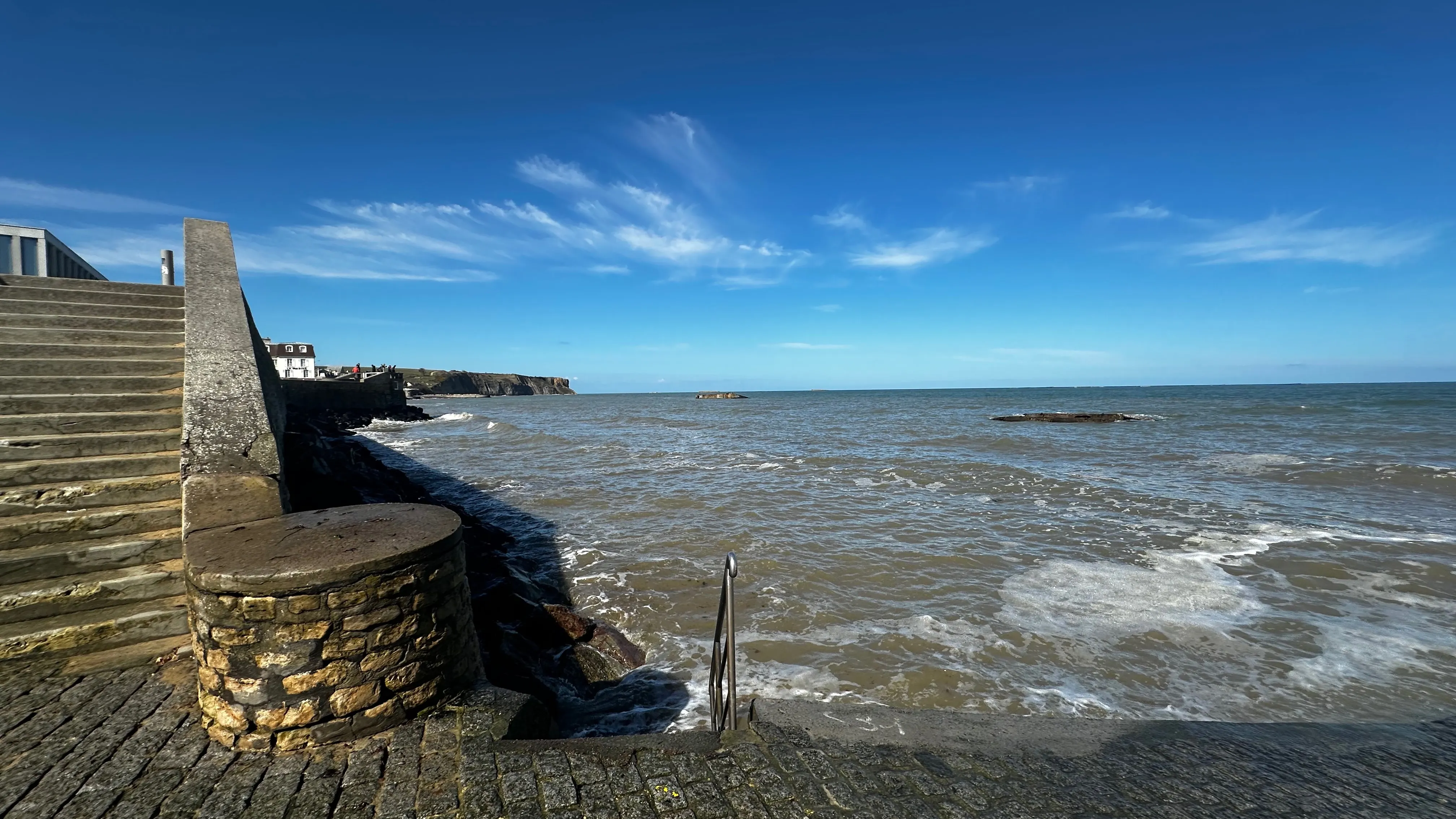
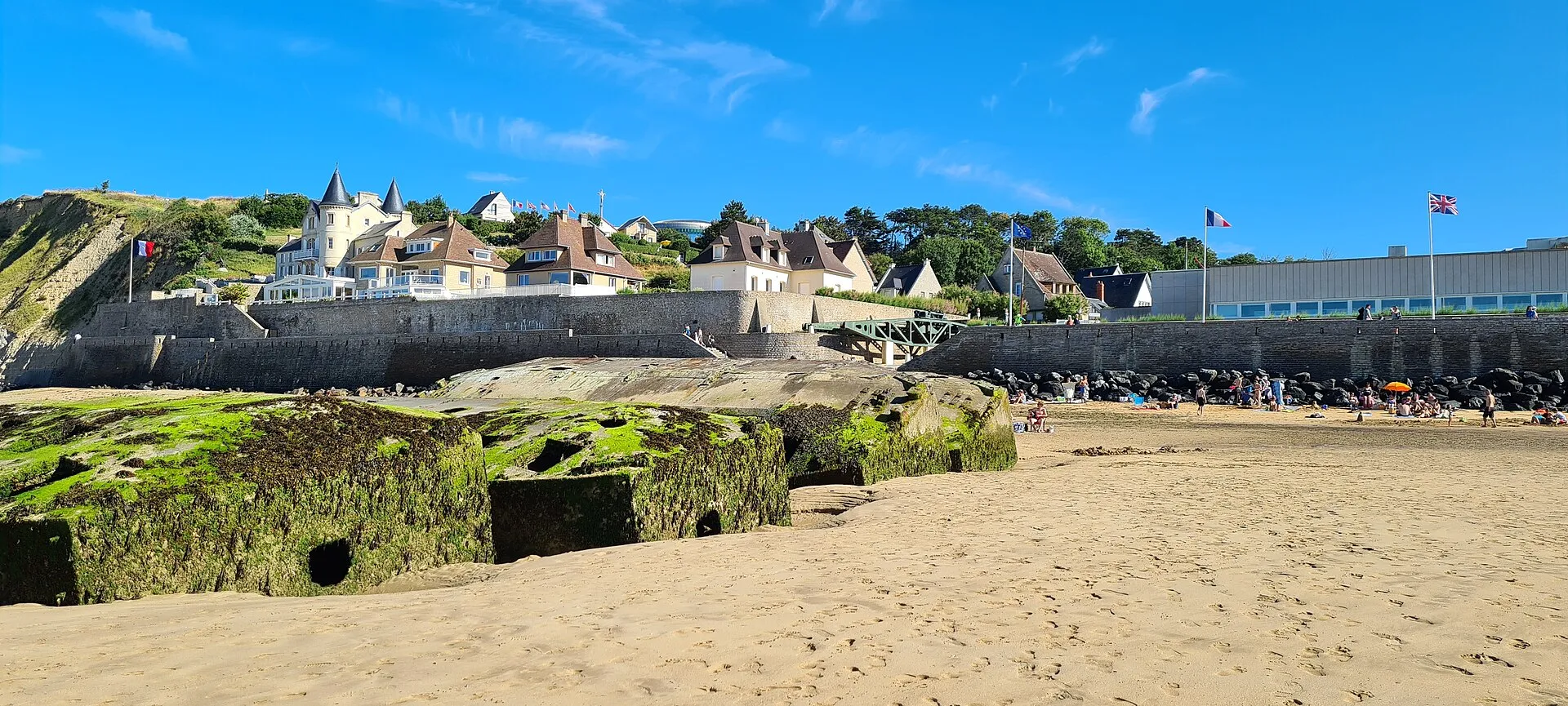
Because geography is on your side. Arromanches lies at the heart of the British sector of Gold Beach, halfway between Juno Beach to the east and Omaha Beach to the west. All the major sites are within less than 40 minutes' drive, and the village itself already adds up to half a day of visits: the beach, the caissons of the artificial harbour, the museum. You explore in a star pattern, without repacking your bags.
Day 1: Arromanches and the Longues-sur-Mer battery
Begin at the beginning: the bay of Arromanches and the remains of the Mulberry harbour, visible from the beach and, at low tide, accessible within a few dozen metres. The Arromanches D-Day Museum, facing the sea, explains the technical feat of this prefabricated harbour towed across from England — a visit that changes the way you look at the concrete blocks in the bay.
Then climb the eastern cliff, to the orientation-table viewpoint near the circular cinema Arromanches 360: the panorama over the artificial harbour is striking. Walkers can carry on along the coastal path — we have devoted a full article to the cliffs and the GR223 from Arromanches.
In the afternoon, take the road west (10 minutes) towards the German battery at Longues-sur-Mer: it is the only coastal battery in the sector to have kept its original guns, set high on the cliff between Gold and Omaha. Free access, wind guaranteed, and emotion too. Finish at the fishing harbour of Port-en-Bessin for a gentler end to the day.
Day 2: Omaha Beach, Pointe du Hoc and Colleville-sur-Mer
Head west for the most intense day of the trip, in the American sector.
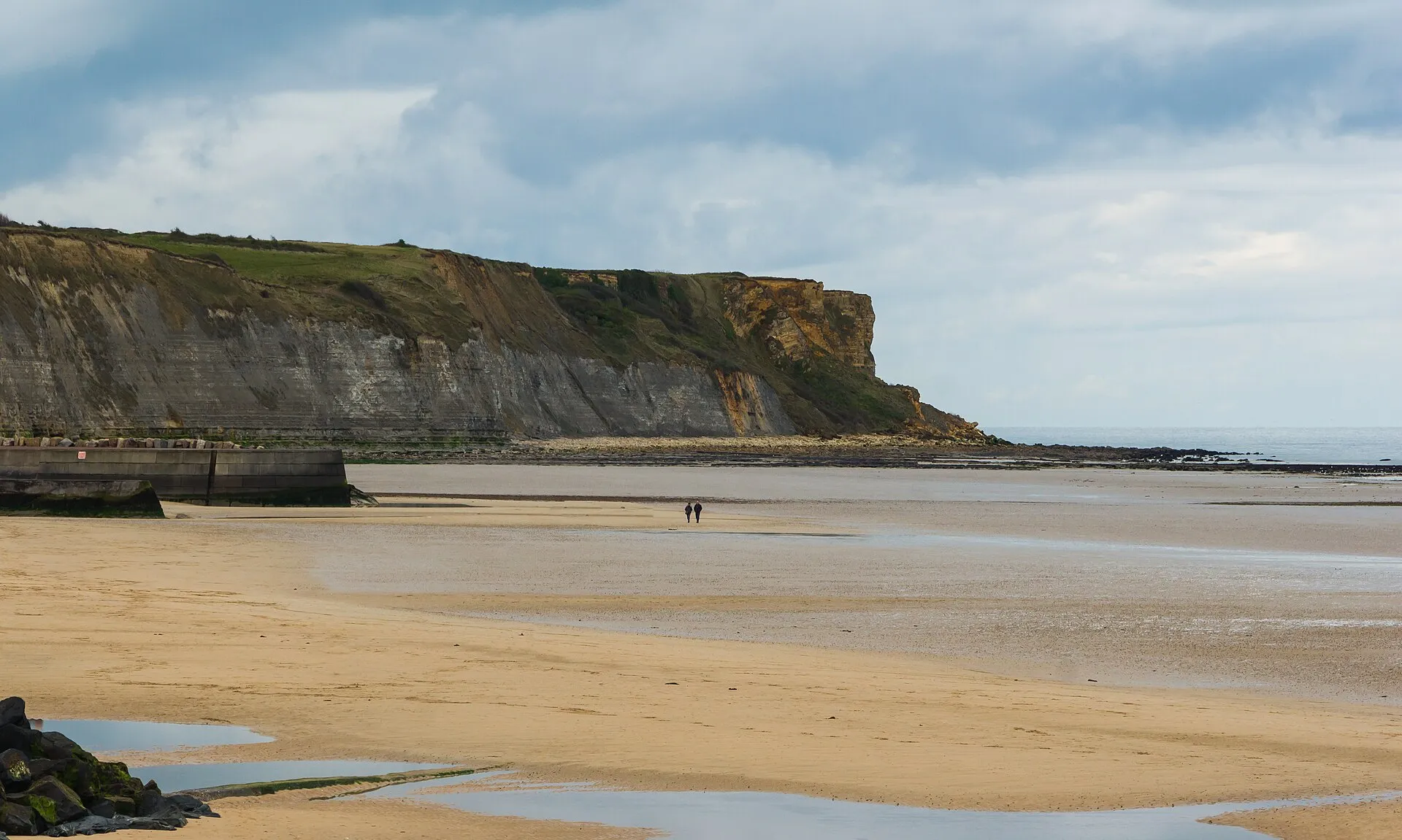
- Omaha Beach (Saint-Laurent-sur-Mer, Vierville-sur-Mer): walk the immense foreshore of "Bloody Omaha", facing the seafront monuments. At low tide, the width of the beach says more than any account about what the soldiers faced on the morning of 6 June 1944.
- American cemetery at Colleville-sur-Mer: 9,389 graves aligned above Omaha. The visitor centre, run by the American Battle Monuments Commission, puts faces to the names. Allow time, and silence.
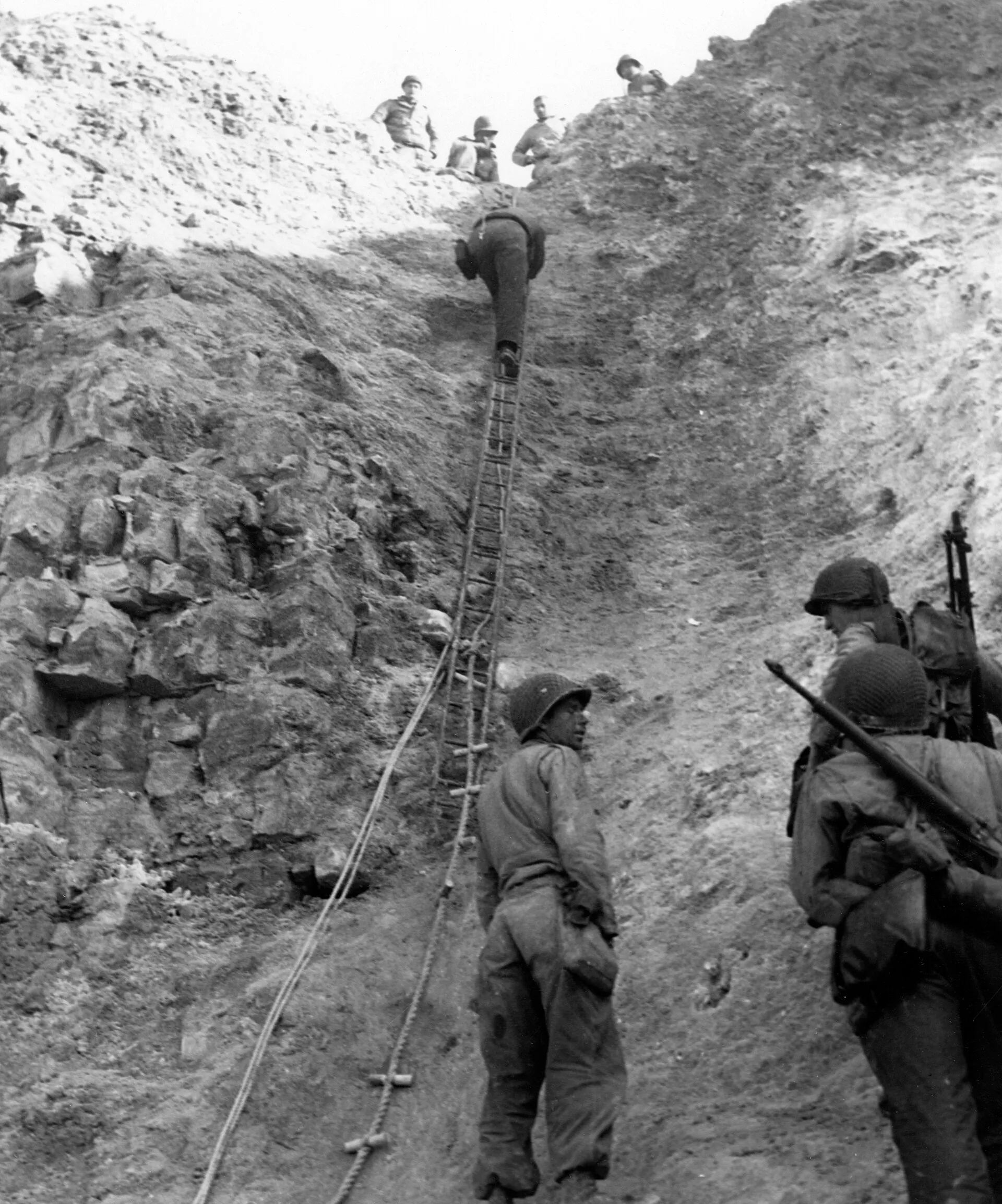
- Pointe du Hoc: the cliff scaled by the Rangers, still pitted with bomb craters and bristling with bunkers. The site, with free access, is one of the most striking landscapes on the coast.
Depending on your pace, add the Overlord Museum at Colleville or the Omaha Beach centre. For lunch, the seafronts of Vierville and Saint-Laurent offer a few simple spots facing the beach.
Day 3: Juno Beach, Courseulles-sur-Mer and Bayeux
Head east this time, towards the Canadian sector. At Courseulles-sur-Mer, the Juno Beach Centre — a museum devoted to Canada's commitment — and the remains that surface among the dunes deserve a morning. The harbour, the fish market halls and the beach round off the visit nicely; we cover it in detail in our article on Courseulles, Juno Beach and Port-en-Bessin.
In the afternoon, head to Bayeux (20 minutes): the first town in mainland France to be liberated, spared by the fighting, with its cathedral, its medieval lanes, the Battle of Normandy Memorial Museum and the British military cemetery. Note for 2026: the Bayeux Tapestry Museum is closed for renovation (reopening announced for 2027), and the tapestry will be displayed at the British Museum in London from September 2026 — check the latest information on the museum's official website. The town itself is well worth the trip even without the embroidery.
How should you organise your visits once there?
A few reflexes that make all the difference:
- Plan around the tides: Omaha and Gold Beach are revealed at their most immense at low tide — the perfect moment to walk the foreshore.
- Start early: the American cemetery and Pointe du Hoc are very busy in the middle of the day, especially from June to August.
- Book museums online where possible, and your accommodation well in advance if you are aiming for early June and the D-Day commemorations.
- Mix paid and free sites: the Longues battery, Pointe du Hoc, the beaches and the cemeteries are all free to visit.
- Check with the tourist office Bayeux Bessin Tourisme for guided tours and current events.
Your base in Arromanches for this remembrance weekend
To live this itinerary without constraint, settle at the centre of the circuit: our studio in Arromanches puts you within walking distance of the beach, the museum and the viewpoints, and less than 40 minutes from every site on this programme. Unpack once, and let the Normandy coast do the rest.
Cover photo: US Navy, 1944, public domain, via Wikimedia Commons.
Frequently asked questions
When is the best time to visit the D-Day beaches?
April to October, for the long days and sites in full season. Early June is unique thanks to the 6 June commemorations and the D-Day Festival Normandy, but crowds peak: book your accommodation several months ahead. May and September strike an excellent balance between weather, light and peace and quiet.
How many days do you need to visit the D-Day beaches?
Two full days cover the essentials: Arromanches and Longues-sur-Mer, then Omaha Beach, Pointe du Hoc and the American cemetery at Colleville-sur-Mer. A third day comfortably adds Juno Beach at Courseulles-sur-Mer and the town of Bayeux. With a week, you can push on to Utah Beach and Sainte-Mère-Église.
Do you need a car to tour the D-Day beaches?
It is far easier by car: the sites are spread along around 80 km of coast and bus links remain limited. Without a car, base yourself in Arromanches or Bayeux and combine local bus lines (the NOMAD network), cycling and guided excursions departing from Bayeux.
Where should you stay to visit the D-Day beaches?
Arromanches-les-Bains makes an ideal base: the village sits at the centre of the Gold-Omaha-Juno sector, 10 minutes from Longues-sur-Mer, 20 minutes from Bayeux and 30-35 minutes from Omaha Beach and Pointe du Hoc. You sleep facing history, with the remains of the artificial harbour before your eyes.