Practical Published on 14 June 2026
Where to Stay to Visit the D-Day Beaches
Arromanches, Bayeux, Courseulles-sur-Mer, Port-en-Bessin: an honest comparison to help you pick a base, with the perks and the downsides of each town.
Choosing where to stay to visit the D-Day beaches mostly comes down to choosing a mood: sleeping right by the sea in a seaside village, or staying in a town a short drive from the coast. Arromanches-les-Bains, Bayeux, Courseulles-sur-Mer, Port-en-Bessin, Ver-sur-Mer... each base has its strengths and its limits. Here is an unfiltered comparison to help you decide based on your priorities.
What's the best base to explore the D-Day beaches?
It mostly depends on which sector of the coast you want to prioritise. The D-Day sites stretch across roughly 80 km of coastline, from the British sector of Gold Beach in the east to the American sector of Utah Beach in the west, with Juno (Canadian) and Omaha (American) in between. A base at the centre of it all — Arromanches or Bayeux — keeps drives short; a more outlying base (Courseulles to the east, Port-en-Bessin to the west) brings you closer to one sector at the cost of a longer drive to the other end.
Arromanches-les-Bains: sleeping at the heart of the Gold Beach sector
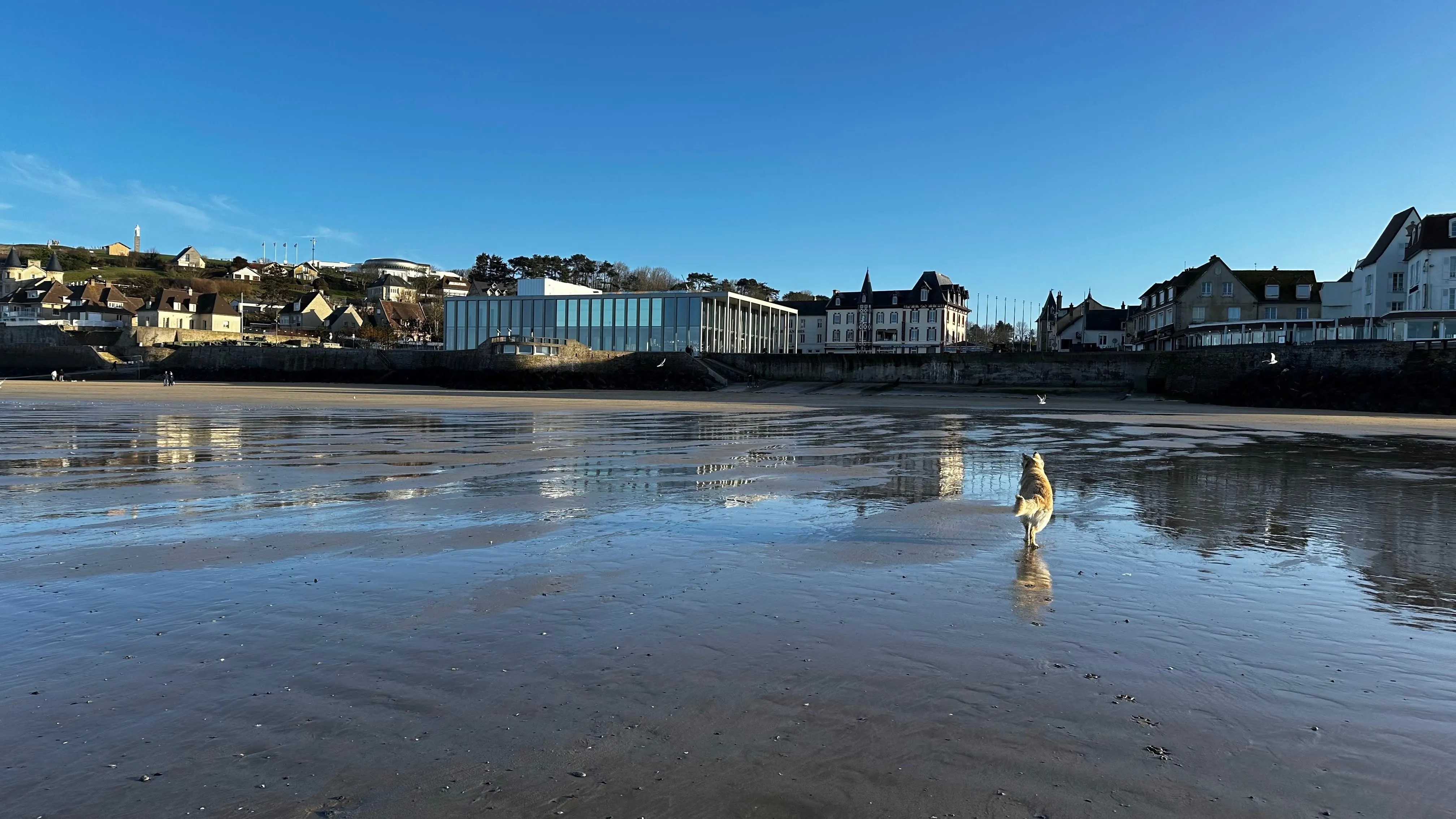
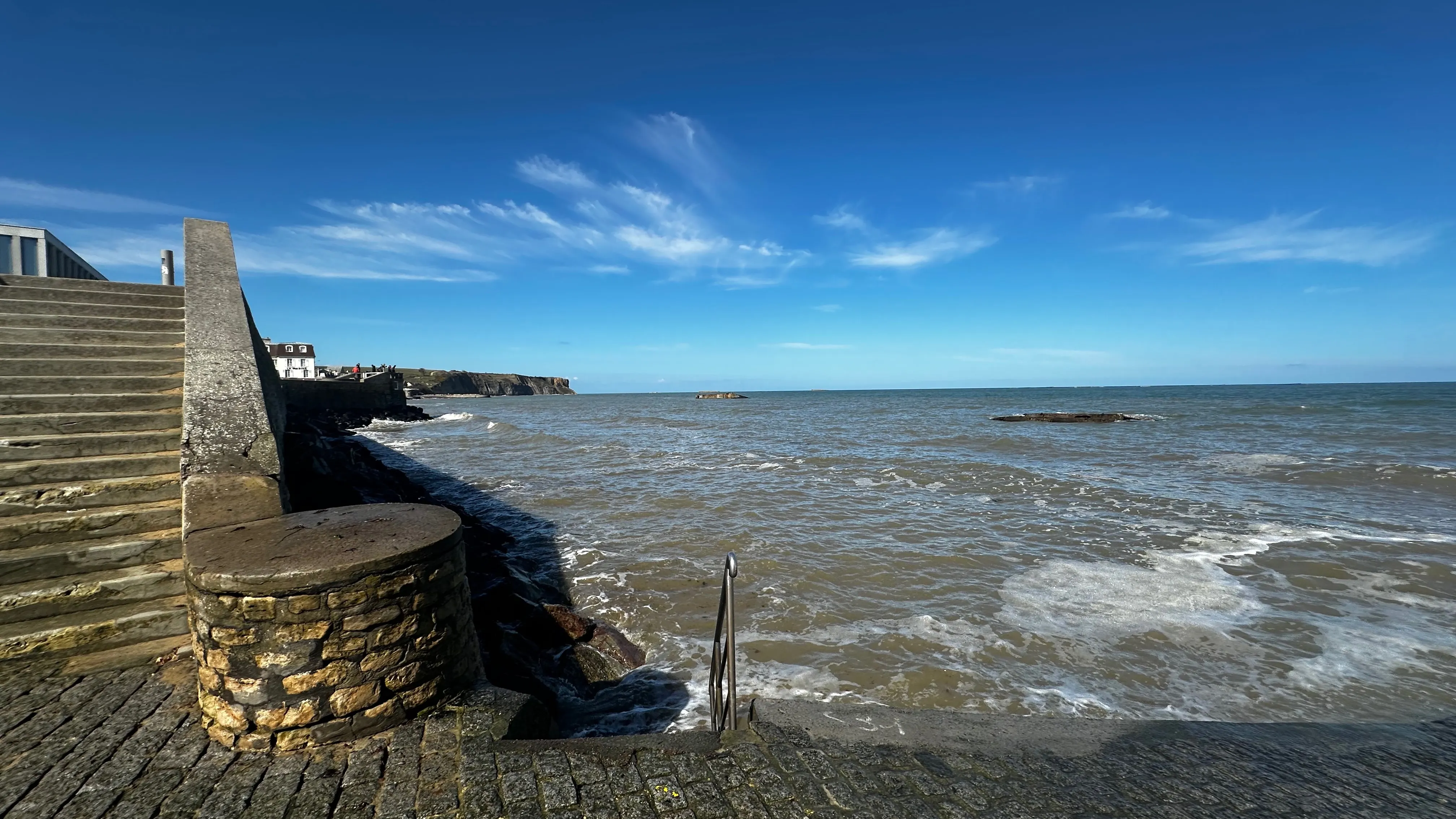
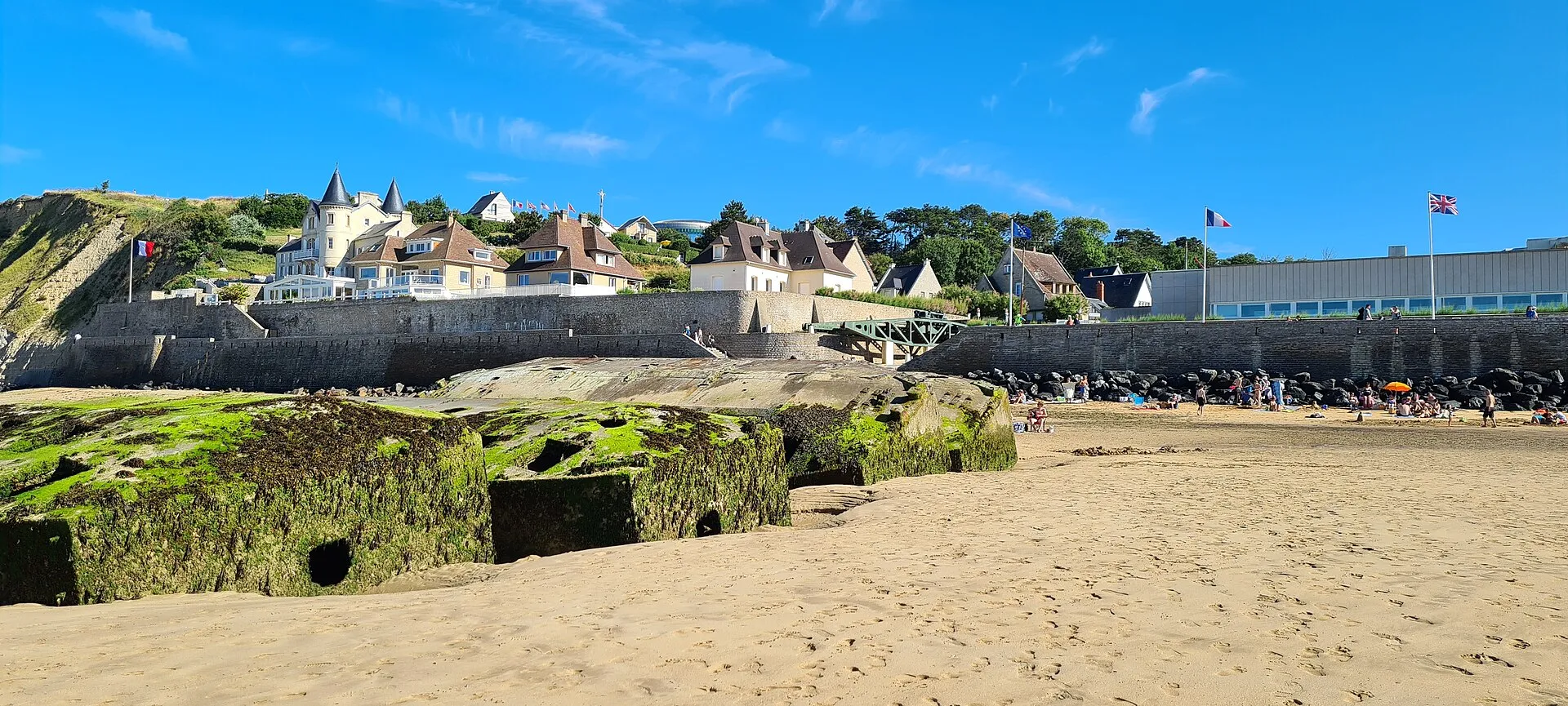
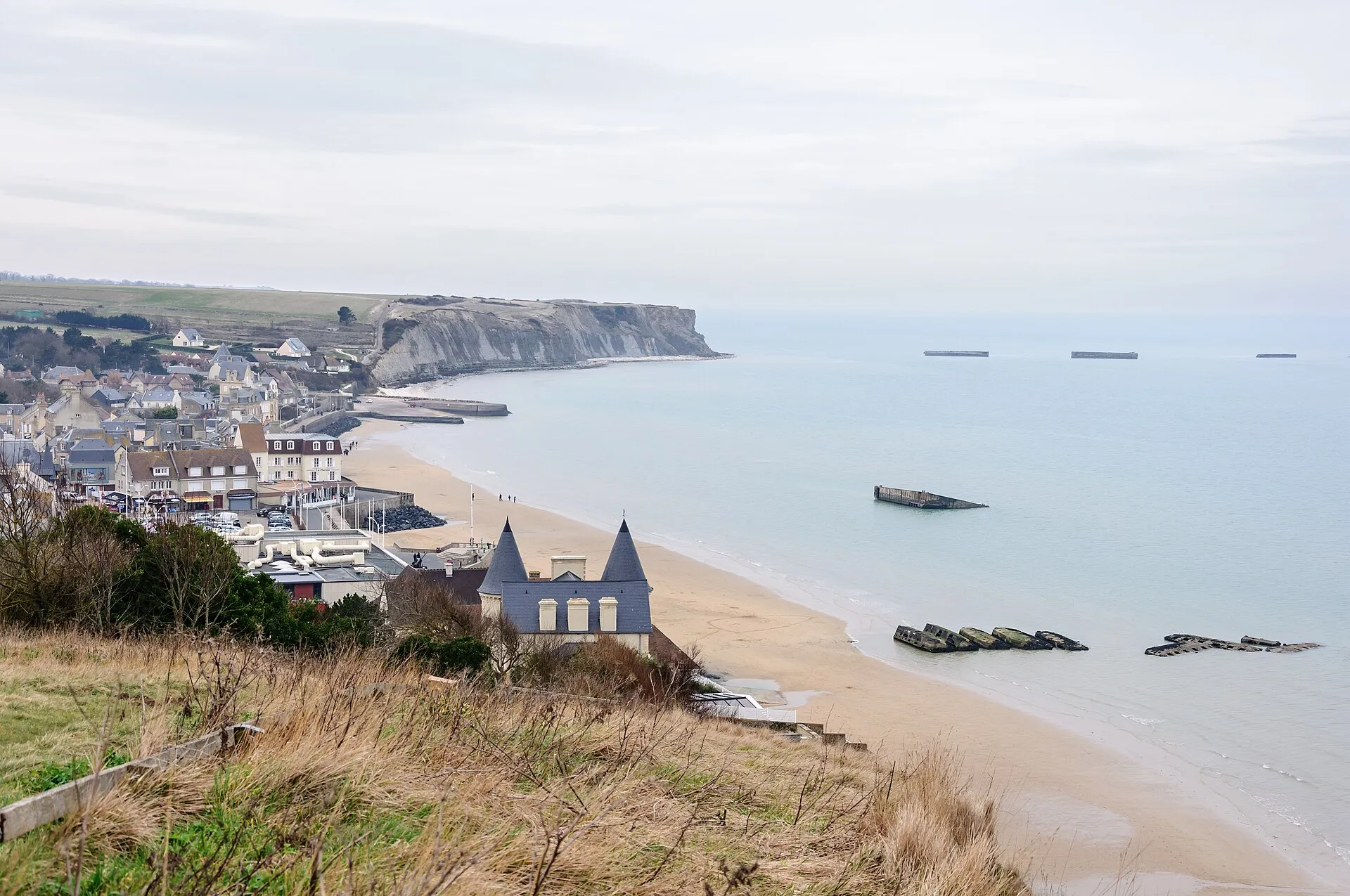
Arromanches sits in a central position, halfway between Juno Beach and Omaha Beach. This is where the remains of the Mulberry artificial harbour rest, visible from the beach at any time and reachable at low tide, and where the D-Day Museum stands right on the seafront. The Longues-sur-Mer battery is about a ten-minute drive away, Bayeux around 15 minutes, and Omaha Beach and Pointe du Hoc 30-35 minutes.
Strengths: sea and history in view from the village, museum and viewpoints within walking distance, a fairly quiet seaside atmosphere. Limits: it's a village, not a town — shops and restaurants are thinner out of season, and you'll need a car (or a bike) to range further afield. We cover the village's accommodation options, including our own studio facing the beach, in more detail in our Arromanches accommodation guide.
Bayeux: the historic town 10 minutes from the sea
The first town in mainland France to be liberated, on 7 June 1944, Bayeux has the advantage of being a proper town: a Gothic cathedral, half-timbered old streets, a Saturday market, restaurants and accommodation (hotels, guesthouses, holiday rentals) open year-round. It's also a convenient starting point for guided excursions to the beaches. Note: the Bayeux Tapestry Museum is closed for renovation until 2027 (the tapestry itself is on loan to the British Museum from September 2026 to July 2027) — we cover what's still worth seeing on site in our article on visiting Bayeux in 2026.
Strengths: a town that's alive year-round, a wide choice of accommodation and restaurants, cathedral and old town within walking distance. Limits: no beach on site — allow 10 km and around a 15-minute drive to reach the coast.
Courseulles-sur-Mer: the seaside resort of the Canadian sector
To the east, Courseulles-sur-Mer is a genuine little resort town: a marina, beach huts, oyster beds, a market. This was Juno Beach on 6 June 1944, the sector of the 3rd Canadian Infantry Division, and the Juno Beach Centre tells that story right by the sea. Good news if you're travelling without a car: in summer 2026, the NOMAD Car line 125 serves both Courseulles and Arromanches on the same route (more on this below).
Strengths: lively seaside atmosphere, harbour and market, close to the Canadian sector and to Ver-sur-Mer. Limits: further from the American sector — allow nearly an hour's drive to reach Omaha Beach or Pointe du Hoc, at the other end of the area.
Port-en-Bessin: the fishing port, for authenticity
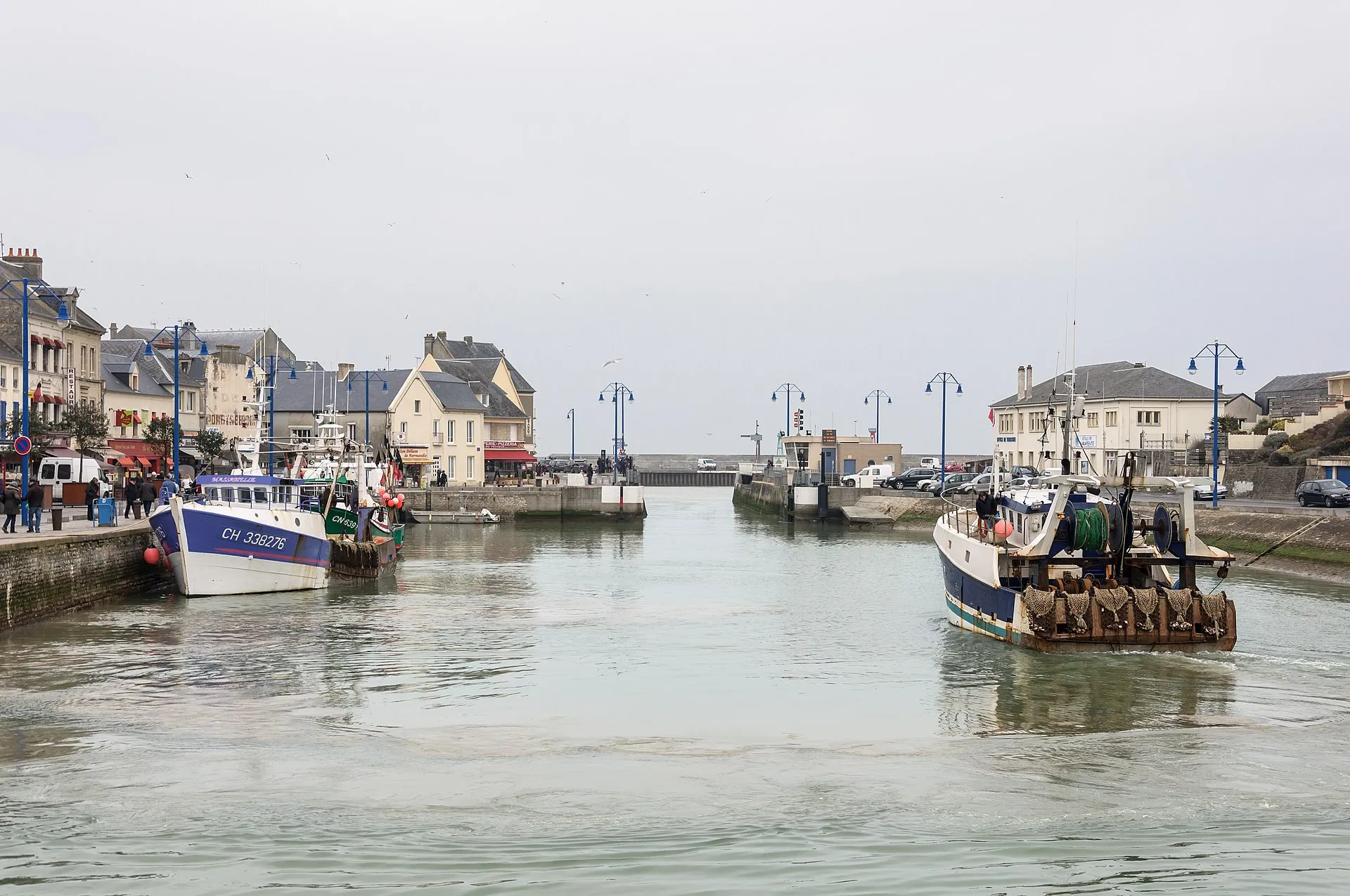
To the west, tucked between two cliffs, Port-en-Bessin-Huppain is Normandy's leading small-scale fishing port: trawlers, a fish auction, scallops on the stalls and on the menus. The mood here is quieter and more "working harbour" than touristy. Its position, slightly further west than Arromanches, brings it a touch closer to the American sector (Omaha Beach, Pointe du Hoc, the cemetery at Colleville-sur-Mer).
Strengths: authenticity, local seafood, a bit closer to the American sites. Limits: very little accommodation on site, almost no nightlife, best visited with a car.
What about Ver-sur-Mer or Asnelles, a quieter alternative?
Between Arromanches and Courseulles, Ver-sur-Mer and Asnelles offer long sandy beaches and a residential setting, even quieter than the neighbouring villages. Ver-sur-Mer is home to the British Normandy Memorial, an open-air memorial dedicated to soldiers who fell under British command. Strengths: peace and quiet, family-friendly beaches. Limits: very few shops or restaurants on site, almost no accommodation outside holiday rentals — more of a backup base than a main camp.
Do you need a car to visit the D-Day beaches?
It's far simpler with a car: the sites are spread over roughly 80 km of coast, and bus connections remain limited for the rest of the year. One notable improvement for summer 2026: the seasonal NOMAD Car line 125 connects Courseulles-sur-Mer to Grandcamp-Maisy via Arromanches-les-Bains, running daily from 5 July to 31 August, making it possible to get around along the coast without a car during peak season. For more isolated inland sites, it's best to combine this with a guided excursion from Bayeux or a rental car.
Our take: where should you pitch your base camp?
If you want to wake up facing the sea and the Mulberry harbour remains, with the D-Day Museum and the cliff paths within walking distance, Arromanches-les-Bains remains the most central base in the area — we go into more detail in our 2 to 3 day itinerary across the D-Day beaches. If you'd rather have a town with more choice of restaurants and accommodation year-round, Bayeux, a 10-minute drive away, is an excellent compromise. Our studio in Arromanches puts you at the centre of it all, facing the sea and less than 40 minutes from every major D-Day site.
Cover photo: Myrabella, CC BY-SA 3.0 license, via Wikimedia Commons.
Frequently asked questions
Where should you stay to visit the D-Day beaches?
There is no single right answer: Arromanches-les-Bains offers the most central location and direct beach access, Bayeux has more shops and year-round accommodation, Courseulles-sur-Mer has a lively seaside-resort feel on the Canadian side, and Port-en-Bessin offers the authenticity of a working fishing port. The right pick mostly depends on whether you want to sleep facing the sea or in a town, and whether you're prioritising the British and American sectors (west) or the Canadian one (east).
Is it better to stay in Arromanches or in Bayeux?
Arromanches suits you if you want the beach, the Mulberry harbour remains and the D-Day Museum within walking distance, at the cost of fewer shops out of season. Bayeux suits you if you'd rather have a proper town with a cathedral, restaurants and varied accommodation year-round, at the cost of being a 10-minute drive from the sea. The two towns are only 10 km apart, so many visitors combine both over a multi-day stay.
Can you visit the D-Day beaches without a car?
It's possible, but it takes some planning: the sites are spread over roughly 80 km of coast. In summer 2026, the seasonal NOMAD Car line 125 connects Courseulles-sur-Mer to Grandcamp-Maisy via Arromanches, making it easier to get around along the coast. For more isolated sites (Pointe du Hoc, the American cemetery), a rental car or a guided excursion departing from Bayeux remains the simplest option.