History Published on 27 June 2026
Normandy American Cemetery and Omaha Beach: Visitor Guide
Hours, free entry, 9,389 graves overlooking Omaha Beach: how to visit the Normandy American Cemetery at Colleville-sur-Mer from Arromanches.
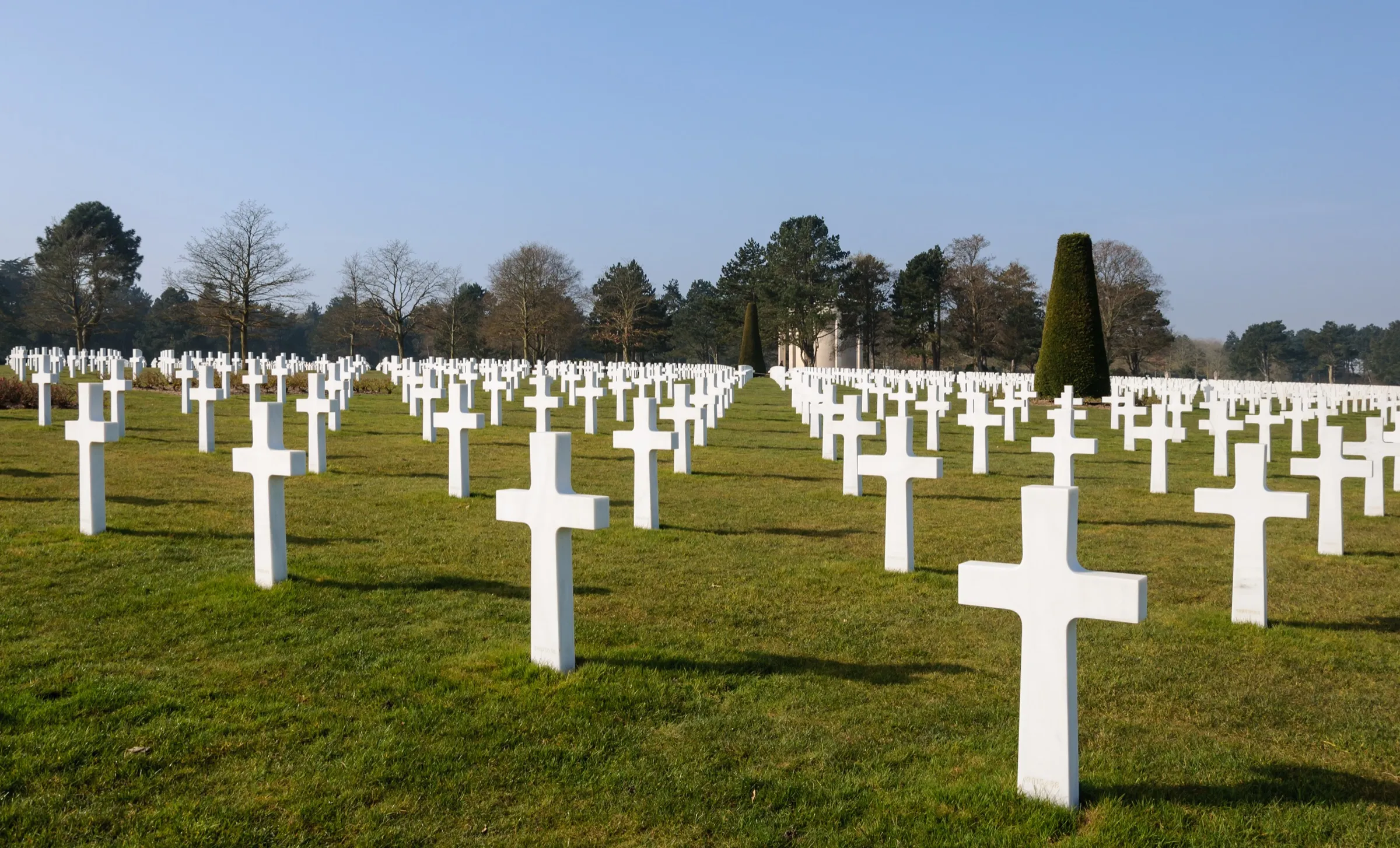
On a lawn spanning more than 70 hectares above Omaha Beach, at Colleville-sur-Mer, 9,389 white crosses and Stars of David stand in rows facing the sea. The Normandy American Cemetery is the most visited of the twenty-six American military cemeteries abroad, and one of the most moving memorial sites of D-Day. Managed by the American Battle Monuments Commission (ABMC), it is free to visit year-round, about twenty minutes' drive from Arromanches-les-Bains. Here is what to know before you go, with the respect this place calls for.
What is the Normandy American Cemetery at Colleville-sur-Mer?
Set on the bluff overlooking Omaha Beach, close to the former temporary cemetery at Saint-Laurent-sur-Mer established during the fighting of 1944, the Normandy American Cemetery was dedicated in 1956. It covers around 70 hectares (172.5 acres) of lawn, and its memorial terrace offers an unobstructed view down onto the beach and the Channel beyond.
What does this memorial site represent?
The site holds 9,389 graves of American servicemen, most of whom died during the D-Day landings on 6 June 1944 and the weeks of fighting that followed the liberation of Normandy. Among them, buried side by side, lie Sergeants Robert and Preston Niland, whose story inspired the film Saving Private Ryan. On the semicircular Wall of the Missing, east of the memorial, 1,557 names are inscribed — servicemen never recovered; 19 of them now bear a bronze rosette, marking that their remains have since been identified.
At the centre of the memorial stands The Spirit of American Youth Rising from the Waves, a 6.7-metre bronze statue by sculptor Donald De Lue, unveiled at the site's dedication in 1956. Each day, roughly an hour before closing, a flag-lowering ceremony gathers visitors for the playing of taps and the ceremonial folding of the American flag.
What else is there to see?
The visitor center, opened in 2007 at the site entrance, uses exhibits, films and soldiers' personal items to tell the story of D-Day and the lives of several of the men buried here — including Theodore Roosevelt Jr., son of the president. Allow an hour to an hour and a half for the full visit, cemetery included.
What are the hours, fees and 2026 requirements?
Entry is free, as at every ABMC site. A few practical pointers:
- Hours: 9 a.m. to 6 p.m. from April to September, 9 a.m. to 5 p.m. the rest of the year; open daily except 25 December and 1 January.
- New for 2026: from 1 April 2026, the ABMC is introducing a pre-registration system for visitors to better manage numbers — the site receives over a million visits a year. If a given day reaches capacity, an alternative date will be offered. As the exact process (online booking, lead time) has yet to be published by the ABMC, check the official website for up-to-date information before you go, especially in high season or around 6 June.
- Dress and conduct: this is a place of remembrance — food and drink other than water are not allowed within the cemetery grounds.
How do you reach Omaha Beach from the cemetery?
From the memorial terrace, the view drops straight down onto Omaha Beach. To reach the sand, you have two options: a footpath down from the site itself, or driving to the access points at Saint-Laurent-sur-Mer and Vierville-sur-Mer, a few kilometres to the west. It is at Saint-Laurent-sur-Mer that the Les Braves monument by Anilore Banon stands — a steel sculpture installed on the sand for the 60th anniversary of D-Day in 2004, one of the most photographed landmarks on the beach.
How do you get there from Arromanches?
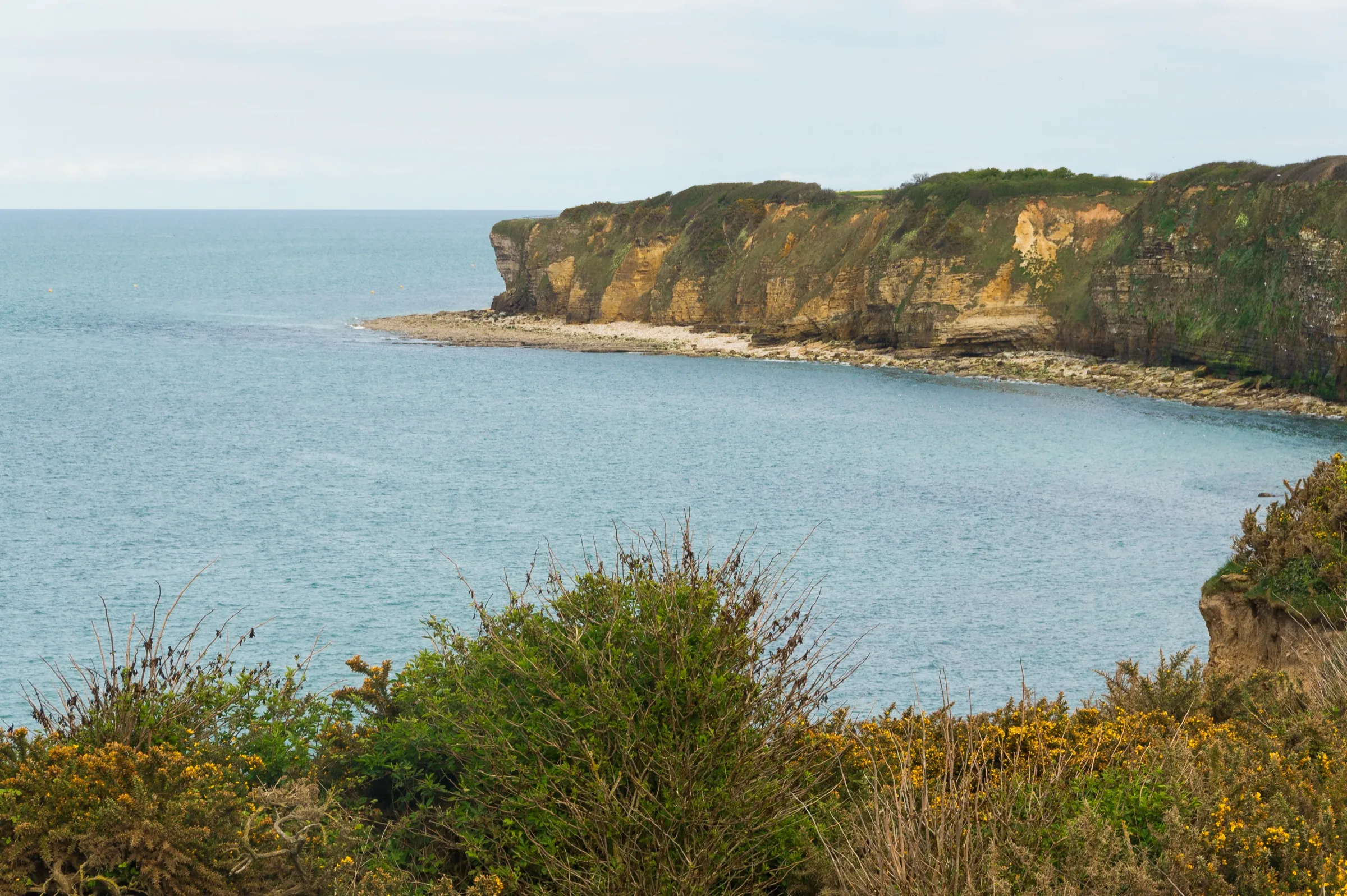
The Normandy American Cemetery at Colleville-sur-Mer lies about 22 km west of Arromanches-les-Bains, a 25- to 30-minute drive along the D514. The visit pairs naturally with Pointe du Hoc, about twenty minutes further along the same road, for a full day devoted to the American sector. Our 2-3 day itinerary along the D-Day beaches lays out a full plan for these visits without rushing — and if your stay coincides with the commemorations, our article on the D-Day ceremonies at Arromanches will help you combine remembrance with logistics.
Stay in Arromanches to visit at your own pace
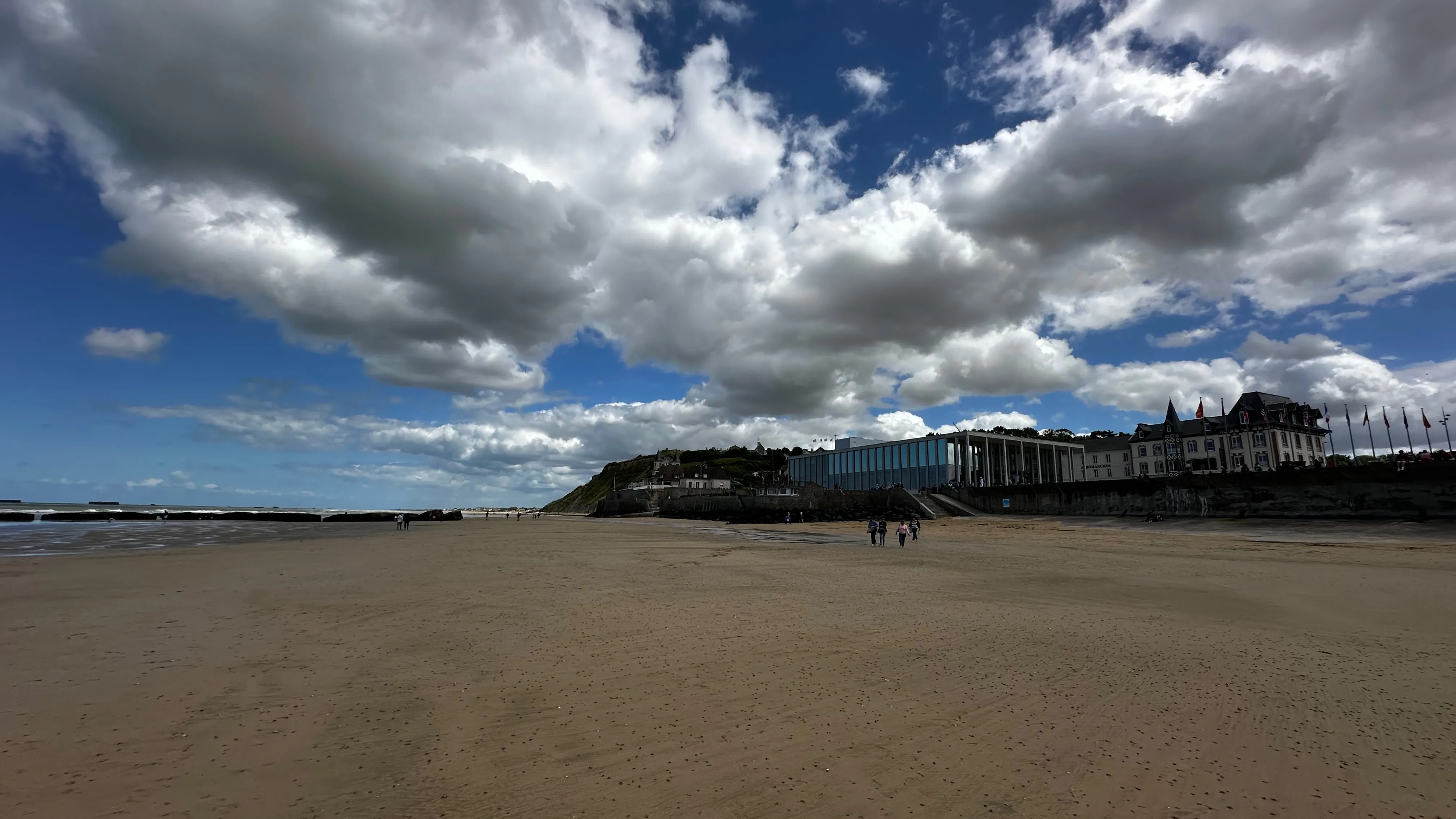
After such a moment of reflection, returning to Arromanches bay and its beach is a good way to catch your breath. Our studio in Arromanches puts you about twenty minutes from the American cemetery, between sea and history, to explore the American sector at your own pace.
Cover photo: Myrabella, CC BY-SA 3.0 licence, via Wikimedia Commons.
Frequently asked questions
Is there an entry fee for the Normandy American Cemetery?
No: entry is free year-round, like all sites managed by the American Battle Monuments Commission (ABMC).
Do I need to book to visit the cemetery in 2026?
From 1 April 2026, the ABMC is introducing a pre-registration system to manage visitor numbers (over a million visits a year); exact details should be checked on the official ABMC website before you go, especially in high season.
How many graves are at the Normandy American Cemetery?
9,389 graves of American servicemen, most of whom died during the D-Day landings and the Battle of Normandy, plus 1,557 names inscribed on the Wall of the Missing.